Rusty Fires Nico Delia Guardia
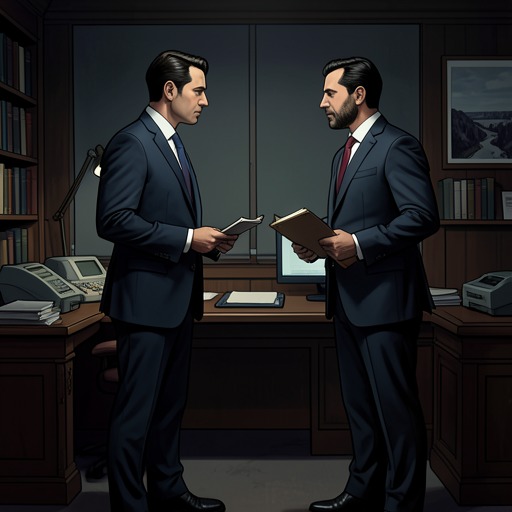
Presumed InnocentRusty Sabich’s dismissal of Nico Delia Guardia marked the rupture of a twelve-year working relationship and the point at which Nico’s pursuit of political power became an institutional conflict. As chief deputy, Rusty carried out the final act Raymond Horgan had left to him: he fired a former colleague whose public challenges to Raymond had become part of a campaign strategy.
Background and Political Conflict
Rusty first met Nico on his own first day as a deputy prosecuting attorney, when they were assigned to share an office. Nico’s reputation for lateness had already supplied a nickname: John White, the old chief deputy, called him Unavoidable Delay Guardia because he could not complete appellate briefs on time. Eleven years after their introduction, Rusty had become chief deputy and Nico headed the Homicide Section.
By then, Nico was overtly trying to drive Raymond out of office. He advocated prosecuting a black physician, an abortionist, for murder; Rusty judged Nico’s legal position unsound, while recognizing that it stirred the interest groups whose support Nico wanted. Nico also planted news stories about his disputes with Raymond and used jury arguments, arranged for abundant press coverage, as campaign speeches. The firing followed this pattern of turning prosecutorial work into political theater, rather than a single private disagreement.
The Dismissal
Raymond left the final act to Rusty. One morning, Rusty went to K mart, bought the cheapest running shoes he could find, and centered them on Nico’s desk with a note wishing him goodbye and good luck. The small, pointed gesture made the dismissal unmistakable: Nico was being sent away, but the shoes also carried the hint that his next race would be political.
The choice of a personal token accompanied a formal professional break between two men who had once shared an office. Rusty later recalled that, on the morning he was fired, Nico walked past his office on the way out, bright and self-assured, and declared that he would return. His confidence made the dismissal seem less like the end of a rivalry than the start of its next phase.
Aftermath and Significance
Rusty regarded campaigning as a natural fit for Nico. Around forty, trim and attentive to his appearance, Nico wore tailor-made suits even when they took a substantial share of his pay. His face, Rusty observed, photographed well and read as handsome across a courtroom. These qualities reinforced the public persona Nico was cultivating, but Rusty identified his more striking trait as an indiscriminate sincerity: he could present his platform with eager, apparently unreflective faith even while speaking with an opponent’s chief assistant at a funeral.
That later encounter shows the dismissal’s continuing political consequences. Rusty tries to let Nico down gently, but tells him his vote is already promised to Raymond. The contrast is sharp: Rusty’s gesture with the shoes had ended Nico’s place in the office, while Nico’s assurance that he would return and his renewed appeal for support showed that the firing had not ended his campaign. The episode reveals how professional authority and electoral ambition had become entangled in the prosecutor’s office, and how a severed working relationship persisted as an open political contest.